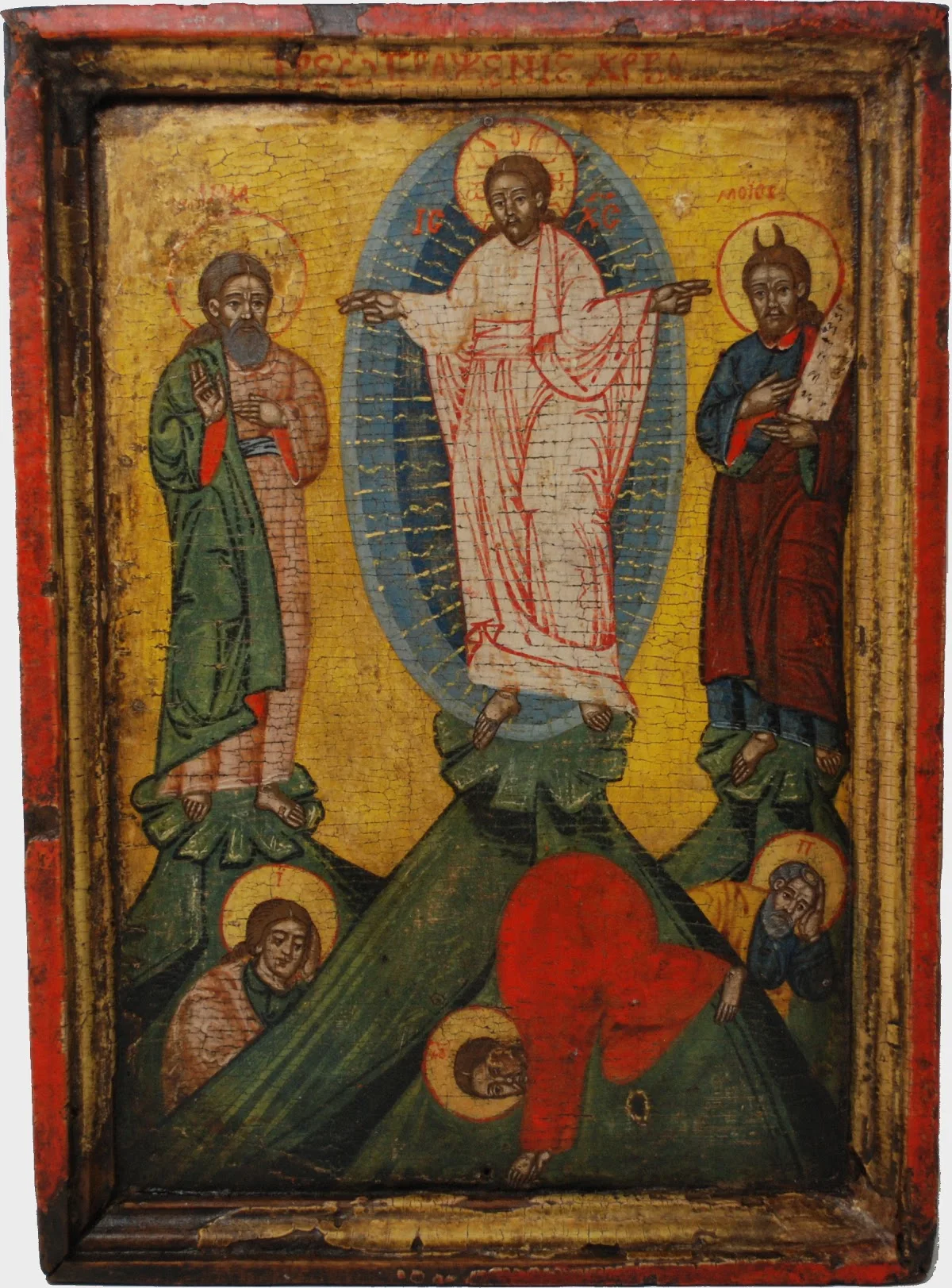
In Orthodox tradition, the icon is often called “theology in color” or a “visible Gospel”. Rather than merely illustrating a biblical episode, it confesses a core doctrinal truth and invites the viewer into stillness and prayer.
1. Christological Foundation: “The Invisible Became Visible”
In the Old Testament, depicting God was forbidden precisely because God had not yet appeared in human flesh. With the Incarnation of Jesus Christ, everything changed: the Son of God became truly human, with a visible face, body, and historical presence. As Saint John of Damascus famously wrote in the 8th century: “I do not worship matter; I worship the Creator of matter, who became matter for my sake and through matter accomplished my salvation.”
2. Worship vs. Veneration: The Council of Nicaea (787)
The Seventh Ecumenical Council (787) clearly articulated the principle guiding icon veneration ever since, quoting Saint Basil the Great: “the honor paid to the image passes to the prototype” (to the person depicted, never to wood or pigment alone).
- Worship / Adoration (latreia): Belongs exclusively to God alone.
- Veneration / Honor (proskynesis): Offered to icons, the Holy Cross, and the Gospel book as visible witnesses of divine grace.
3. How to “Read” the Visual Language of an Icon
The stylization of an icon is never a sign of technical limitation — it is a deliberate theological choice intended to reveal a transfigured reality rather than a fleeting photograph:
- Inverse perspective: Architectural lines do not converge into the distant background as in Renaissance painting; instead they open outward toward the viewer — expressing that the icon comes out to meet us and draw us into the space of prayer.
- Shadowless light & gold background: Icons have no harsh directional light source casting earthly shadows; radiance emanates from within the figures, while gold symbolizes the uncreated light of the Kingdom.
- Facial proportions: Large, serene eyes signify contemplation, a small mouth evokes silence and restraint, and a high forehead conveys spiritual wisdom.
- Color symbolism: Red / purple denotes imperial dignity, sacrifice, and divinity (in Christ) or deified humanity; blue symbolizes heaven and mystery; white represents purity and the light of the Resurrection; green expresses life and spiritual renewal.
- Canonical inscriptions: Naming the person depicted is integral to the icon's identity.
Icons of Christ bear the Christogram
IC XC(Jesus Christ) and the Greek lettersΟ ΩΝ(“He Who Is”) within the cruciform halo, while icons of the Virgin bearΜΡ ΘΥ(Mētēr Theou — “Mother of God”).