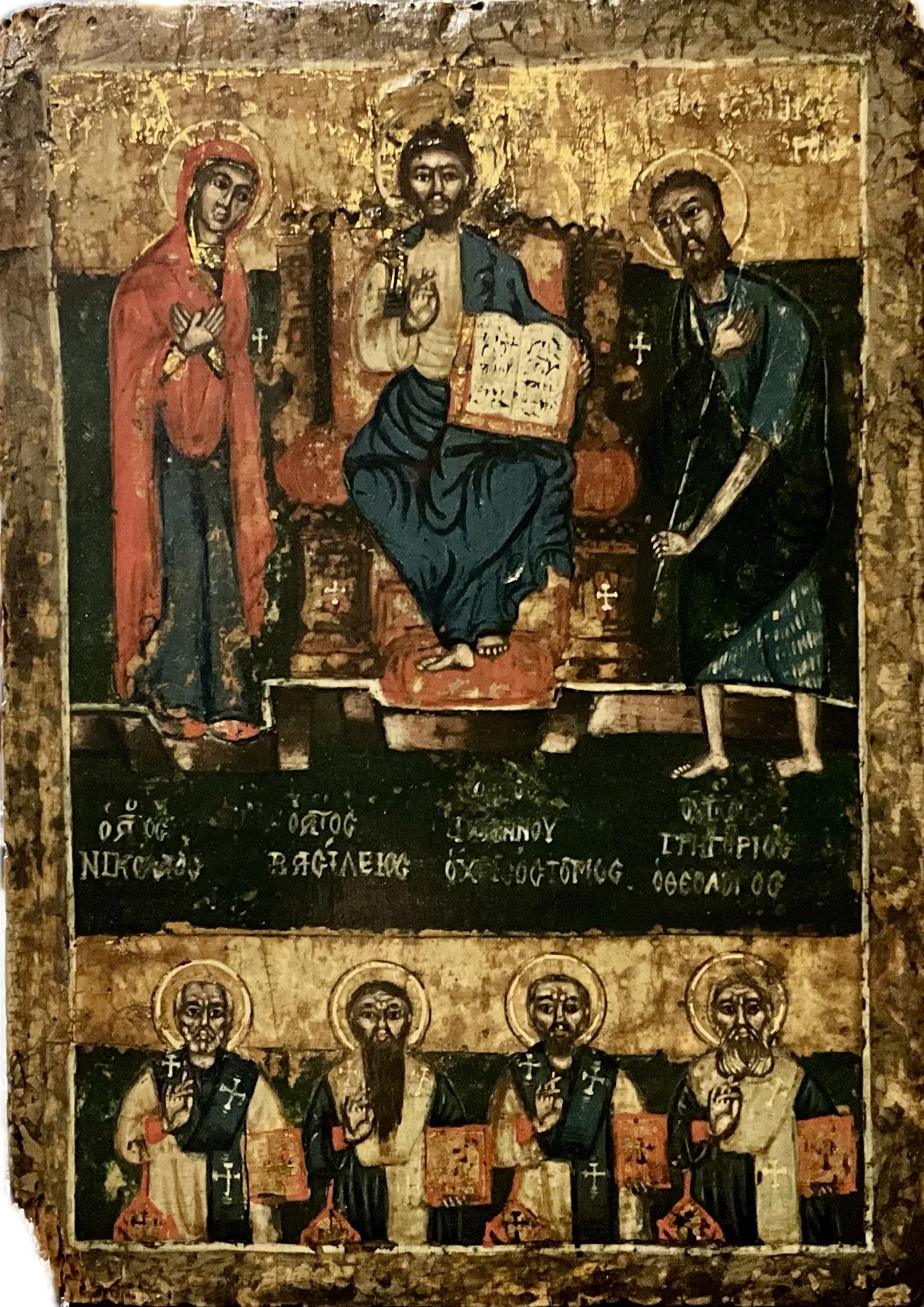
The luminous beauty and extraordinary longevity of an antique icon are rooted in a disciplined craft handed down over centuries. Every layer — from selecting seasoned timber to applying protective varnish — serves a precise structural role and offers vital clues for expert authentication and dating.
1. The Classical Technique: Egg Tempera on Wood
From the 8th–9th centuries onward, egg-yolk tempera became the universal medium of Orthodox iconography, superseding ancient encaustic. Its execution follows seven canonical stages:
- The Wooden Panel: Naturally seasoned timber (linden, cypress, pine, poplar, or oak), reinforced on the reverse with dovetailed splines (sponki) to prevent warping. Many icons feature a carved recessed central field known as a kovcheg (“ark”), framing the painted image.
- Sizing & Linen Backing (Pavoloka): A fine linen or hemp cloth glued to the board with warm animal-hide glue, absorbing the wood's natural seasonal movement.
- Ground Preparation (Levkas / Gesso): 6 to 12 thin coats of natural chalk or slaked gypsum mixed with rabbit-skin glue, polished to an ivory-smooth finish.
- Underdrawing & Incision (Grafia): Outlining the composition and lightly incising key lines with a fine stylus so they remain visible beneath gilding and pigment layers.
- Gilding with Gold Leaf: Applied over fine reddish clay (bole) for burnished water gilding (polished with an agate stone) or over oil size (mixtion) for matte gilding.
- Egg Tempera Painting: Natural mineral pigments (ochre, raw sienna, cinnabar, lapis lazuli, malachite, lead white) ground with egg yolk and a touch of wine or vinegar. Modeling proceeds from dark underpainting (proplasmos) through progressive highlights to crisp final white light strokes (bliki).
- Varnishing (Olifa): A protective seal of boiled linseed oil or natural resin. Over the centuries, olifa gradually darkens, imparting the warm amber patina prized on genuine antique icons.
2. Other Traditional Icon Techniques
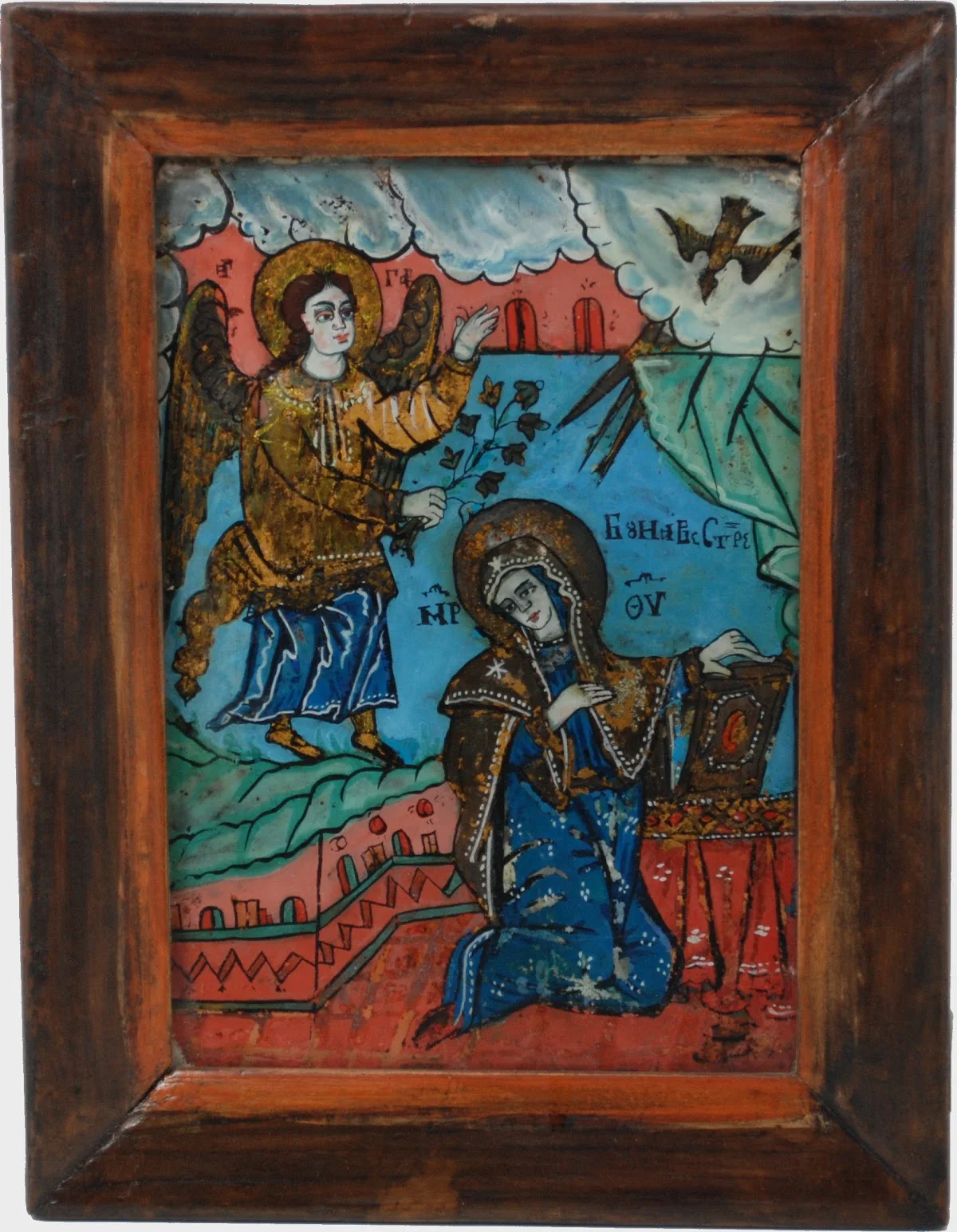
- Transylvanian Reverse Glass Icons (Glajă): Characteristic of 18th–19th century Transylvania (centers such as Nicula, Șcheii Brașovului, Făgăraș, Lancrăm, and Laz). The artist paints on the back of handmade crown glass in reverse order: black outlines and final highlights first, and background colors last.
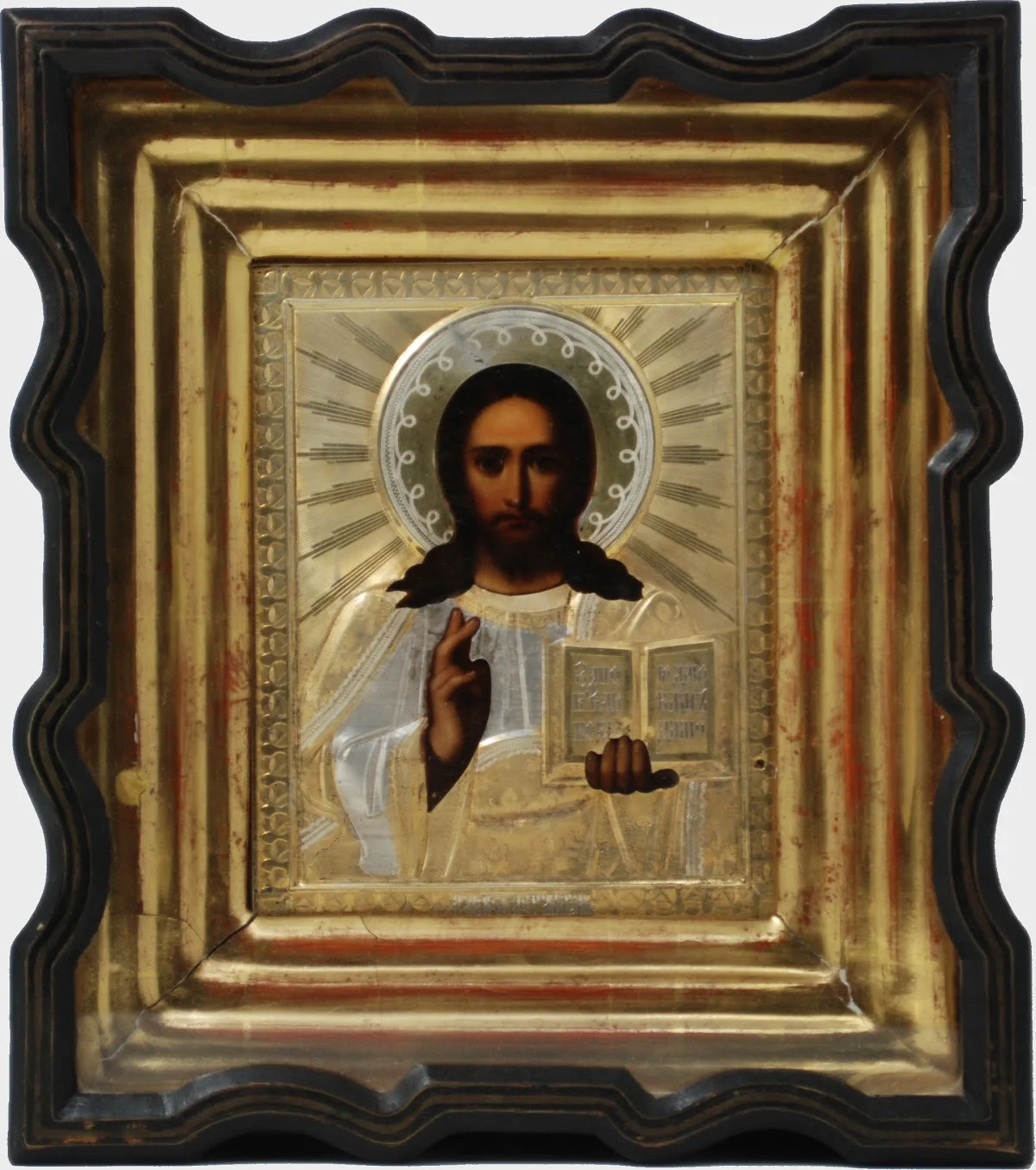
- Icons with Silver or Metal Covers (Riza / Oklad): Repoussé and chased
covers in silver, gilt silver, or brass protecting garments and backgrounds while leaving the painted face and
hands exposed. Imperial Russian mounts often carry hallmark stamps (e.g.
84 zolotniks), assay year, and silversmith initials. - Cast-Bronze & Enamel Icons: Portable travel icons, blessing crosses, and folding triptychs (particularly common among Russian Old Believers, 17th–19th c.), often accented with polychrome enamel.
3. Major Iconographic Styles & Schools
| School / Style | Period | Distinctive Traits |
|---|---|---|
| Cretan & Byzantine School | 15th–17th C. | Impeccable draftsmanship, sculptural facial modeling over olive underpainting, poised synthesis of Byzantine canon and Renaissance grace. |
| Romanian & Balkan School | 16th–19th C. | Warm palette (ochre, cinnabar red, emerald green), Brâncovenesc floral scrollwork, and lyrical expressiveness across monastic and village workshops. |
| Russian Schools (Novgorod, Moscow, Stroganov, Palekh, Nevyansk) | 15th–19th C. | Ranging from Novgorod's bold chromatic monumentality to the miniature refinement and gold hatching (assist) of Stroganov and Palekh, alongside fine silver riza mounts. |