The word icon derives from the Greek eikōn (εἰκών — “image”, “likeness”). In Eastern Christianity, an icon is far more than a religious painting: it is a liturgical image born from the meeting of ancient Mediterranean portraiture and the theology of the Incarnation, codified over fifteen centuries.
1. Origins: Catacombs, Fayum, and Mount Sinai (2nd–7th Centuries)
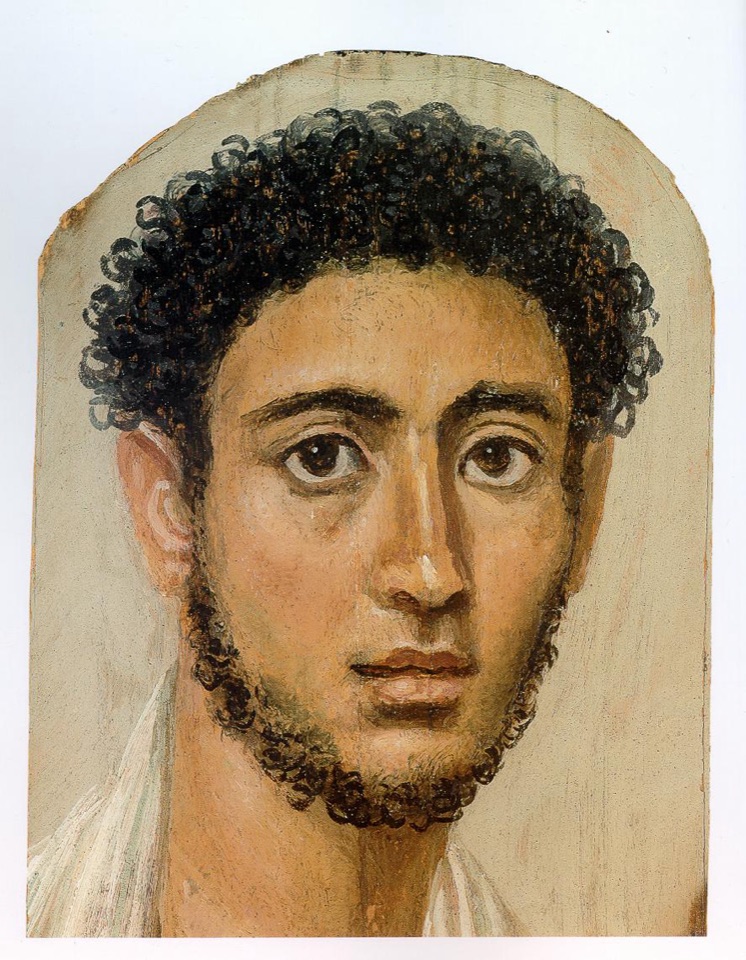
The earliest surviving works of Christian art appear in the 2nd and 3rd centuries in the wall paintings of the Roman catacombs and the house-church of Dura-Europos (Syria). As a portable painting on a wooden panel, the icon directly inherited the technical craft of the Fayum mummy portraits (Roman Egypt, 1st–3rd centuries AD), executed in encaustic — mineral pigments bound with heated beeswax.
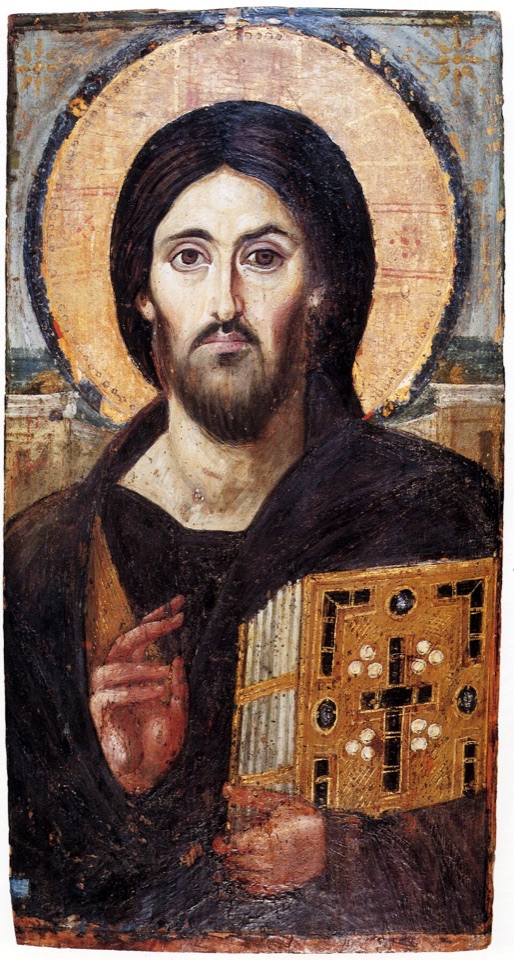
The oldest portable icons preserved to this day date from the 6th and 7th centuries and are safeguarded mainly at Saint Catherine's Monastery on Mount Sinai, spared from later destruction by their geographic isolation. The famous Christ Pantocrator (6th century) captures the precise transition from classical antique naturalism to the transfigured solemnity of Byzantine sacred art.
2. The Iconoclastic Crisis (726–843)
Between 726 and 843, the Byzantine Empire was shaken by the Iconoclastic (“image-breaking”) controversy, unfolding in two major phases:
- First Iconoclasm (726–787): Initiated by Emperor Leo III the Isaurian and intensified under Constantine V, resulting in widespread destruction of mosaics and icons across Constantinople and Asia Minor. It ended with the Seventh Ecumenical Council of Nicaea (787), convened by Empress Irene.
- Second Iconoclasm (814–843): Renewed under Leo V the Armenian and definitively resolved on March 11, 843 under Empress Theodora and Patriarch Methodios — commemorated annually on the First Sunday of Great Lent as the Triumph of Orthodoxy.
Out of this debate emerged the precise doctrinal articulation of icon veneration (formulated by Saint John of Damascus and Saint Theodore the Studite), explored in detail in our guide on the theology of the icon.
3. The Great Byzantine Eras (9th–15th Centuries)
- Macedonian Renaissance (867–1056): Restoration of unified church iconographic programs, classical poise, harmonious proportions, and the decisive shift from encaustic to egg tempera on gesso.
- Komnenian Era (1081–1185): More dynamic linear rhythms, expressive drapery folds, inner drama, and heightened emotional intensity in facial rendering.
- Palaiologan Renaissance (1261–1453): Constantinople's final artistic flowering, marked by luminous color palettes, graceful movement, and psychological depth, radiating across the Balkans, the Romanian Principalities, and Russia (Theophanes the Greek, Saint Andrei Rublev).
4. The Post-Byzantine Era & Collector Icons (16th–19th Centuries)
Following the fall of Constantinople (1453), icon painting did not vanish; instead it flourished in distinct regional centers: the Cretan School (15th–17th c.), Mount Athos, Balkan, and Romanian workshops (including the Brâncovenesc synthesis and Transylvanian reverse glass icons), and the Russian schools (Moscow, Stroganov, Palekh, Mstyora, Nevyansk). The majority of authentic museum pieces and works in Galeria Anton's antique icons collection belong to this rich era.
- 1st–3rd C.
- Fayum encaustic funerary portraits and early Christian catacomb frescoes.
- 6th–7th C.
- Oldest surviving portable panel icons (Saint Catherine's Monastery, Sinai).
- 726–843
- Iconoclastic Crisis; Seventh Ecumenical Council (787) and Triumph of Orthodoxy (843).
- 867–1453
- Macedonian, Komnenian, and Palaiologan periods — the pinnacle of Byzantine art.
- 16th–19th C.
- Flourishing of Post-Byzantine schools: Cretan, Balkan, Romanian, and Russian.